
There’s a moment at almost every wedding when someone looks at me, waiting for instructions — where to stand, how to smile, when to move.
I don’t step in right away.
Not because I’m shy (I’m not — I’m perfectly comfortable walking into a room full of strangers with two cameras and quietly finding my place). And not because I refuse to do group photos. I do them — just without turning the whole day into a sequence of commands.
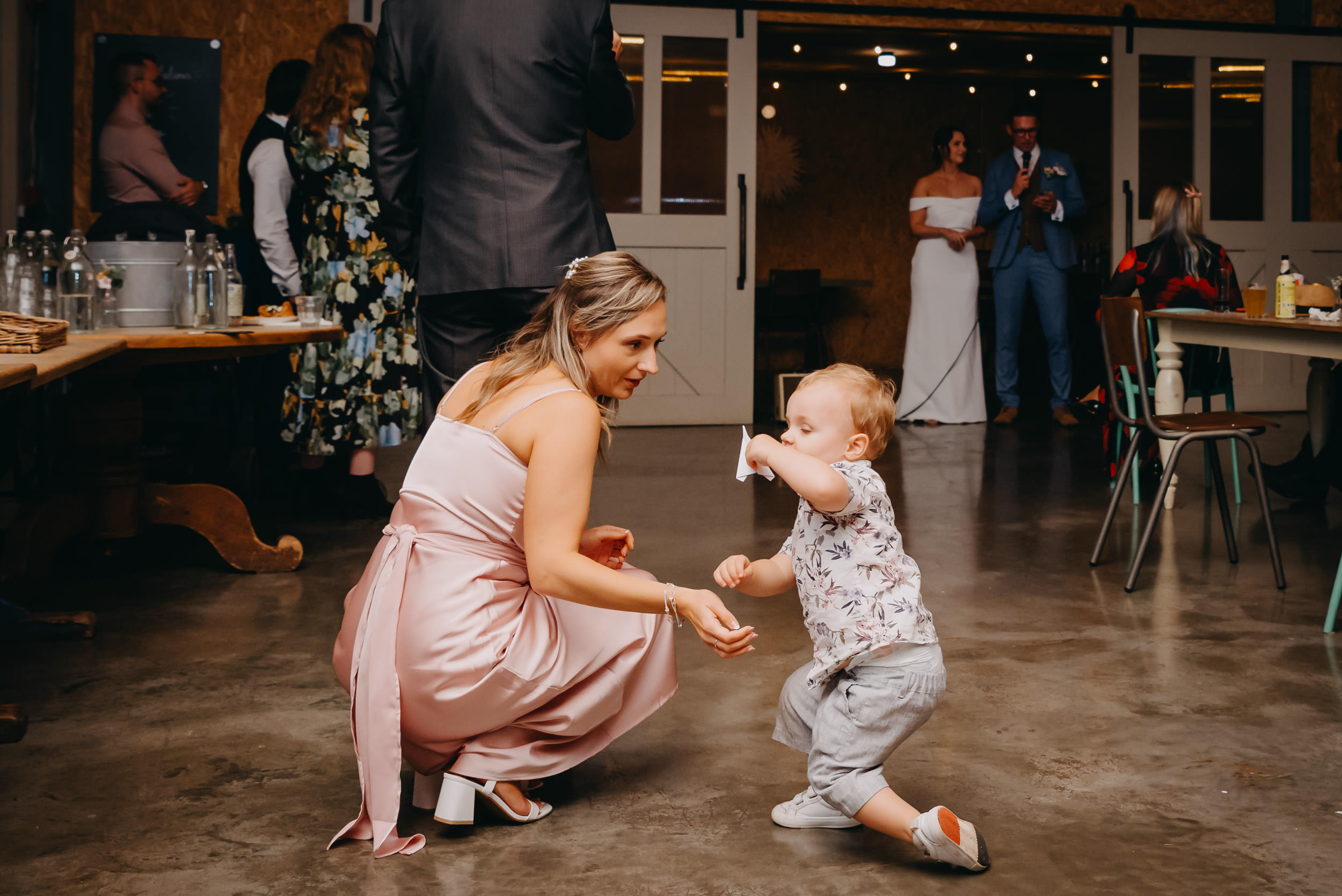
I don’t direct weddings because the best bits happen when nobody is being managed.
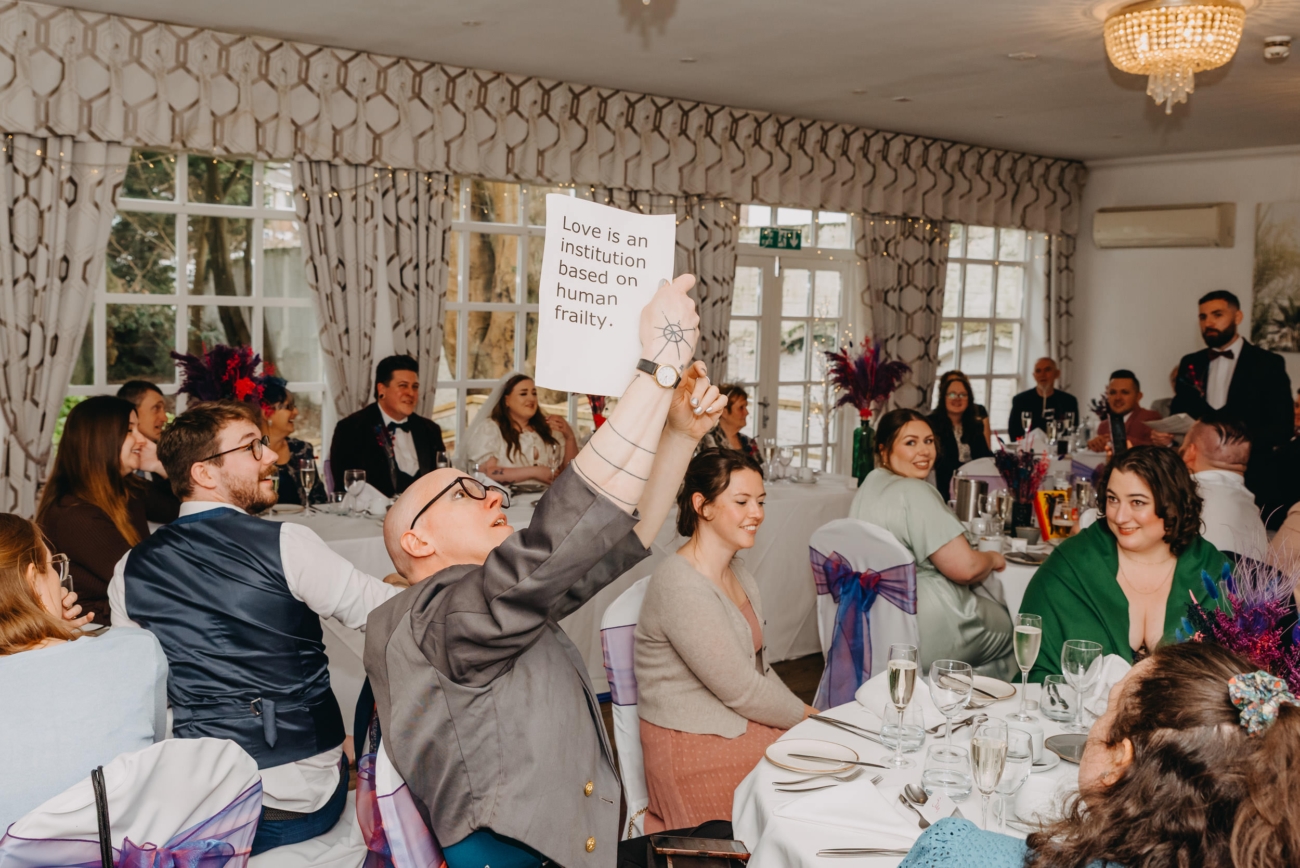
The truth is: weddings are already directed. By emotions. By nerves. By time pressure. By Auntie Linda deciding it’s the perfect moment to cry, loudly, into a napkin. My job isn’t to add another layer of control. My job is to notice what’s real — and keep it from disappearing.
Documentary wedding photography isn’t “doing nothing”
Let’s get one thing straight: not directing doesn’t mean I’m passive.
It means I’m watching, anticipating, moving quietly, and making decisions in milliseconds — so you don’t have to.
Documentary wedding photography is active work, just with a different goal:
- not “make it look perfect”
- but “make it feel true”
Because when you look back in ten years, you’re not going to miss technical perfection. You’re going to miss how things felt — and that feeling rarely lives in rehearsed or corrected moments.
What I do instead of directing
I do three things, consistently:
1) I read the room
Every wedding has its own rhythm. Some are loud and chaotic, others are gentle and intimate. I match that energy — not the other way around.
2) I stay close to real interactions
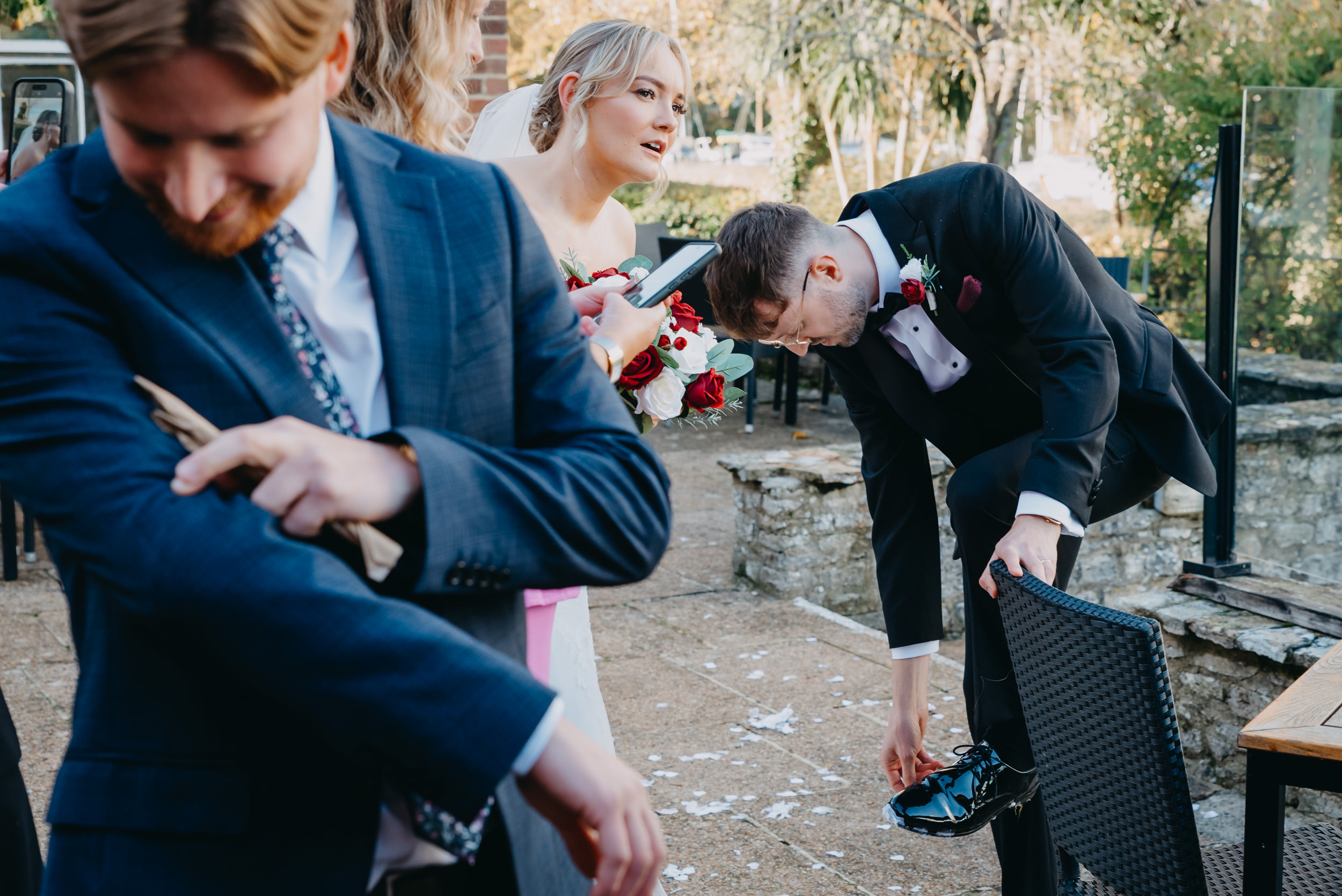
If people are talking, hugging, laughing, panicking slightly, re-applying mascara, or suddenly realising the rings are in the wrong pocket — that’s the story.
3) I let moments finish
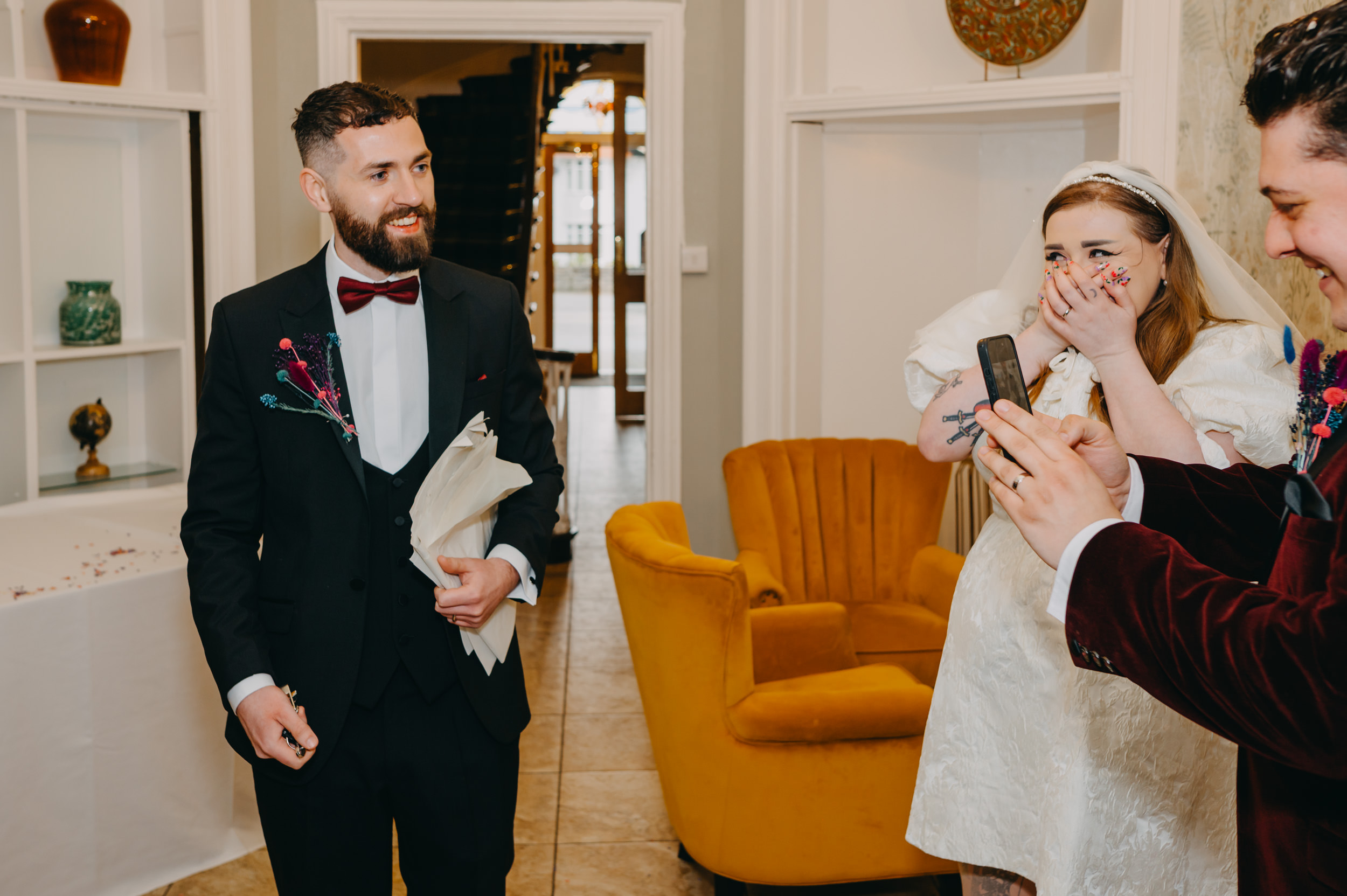
A moment isn’t a single frame. It’s a small sequence: build-up, reaction, aftershock. If you interrupt it, you get a clean photo… and a broken memory.
Why directing can change what the day is
Here’s the unpopular bit: the moment you start directing, the wedding becomes a performance.
And that’s fine — if what you want is a wedding that looks a certain way.
But if what you want is a wedding that feels like you… then direction can quietly change the whole atmosphere.
Because once people realise there’s a camera that wants something from them, they start editing themselves:
- they tighten up
- they become “camera-aware”
- they stop being in the moment
That’s not their fault. It’s human.
“But we’re awkward… we need help”
You’re not awkward. You’re normal.
Most people feel weird being photographed because they’ve been trained to think photos are about looking good, rather than being real.
The good news: you don’t need to be “good at photos” for documentary photography to work.
You just need to be present.
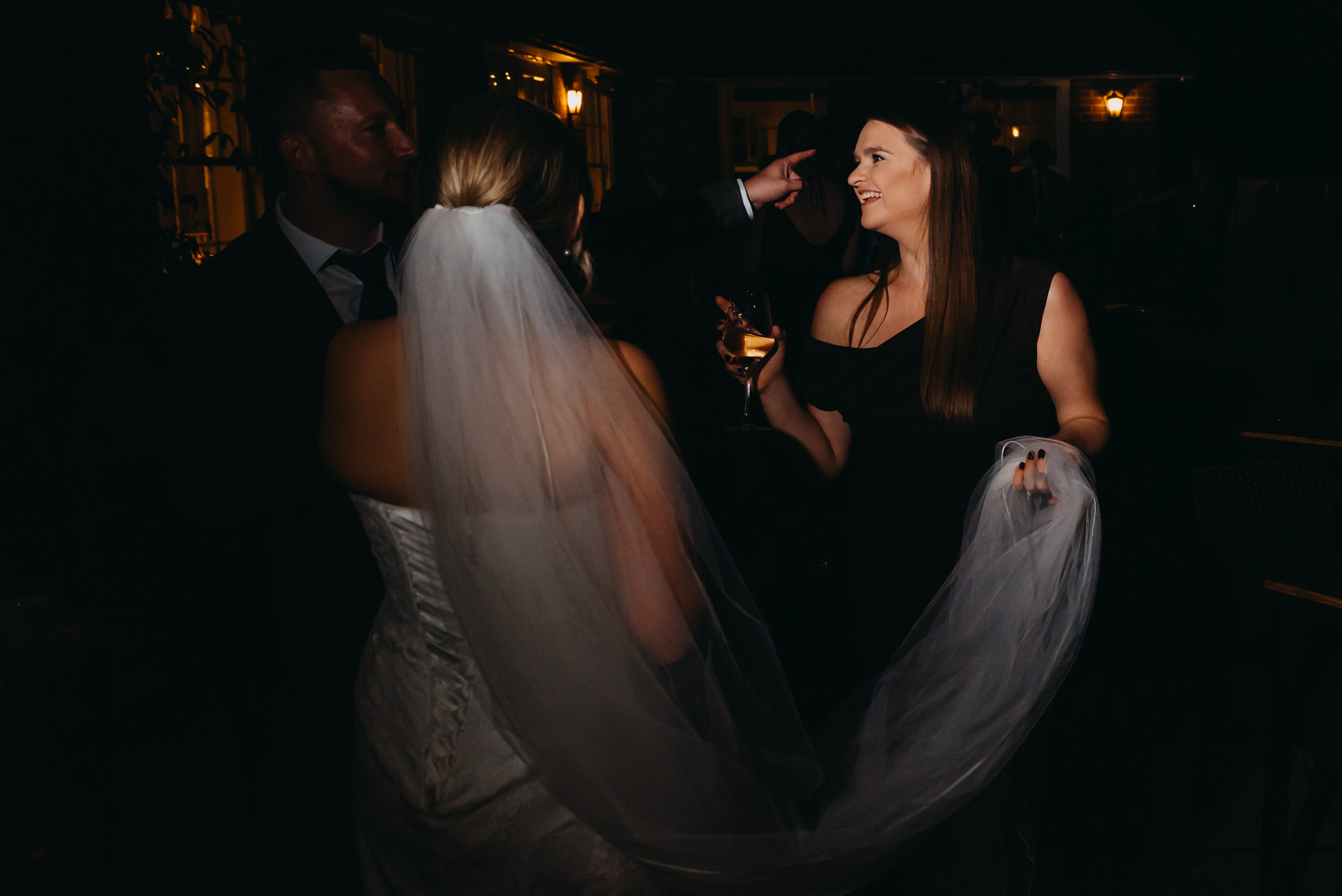
And I’ll do the rest — by not turning your wedding into a content shoot.
Candid wedding photography without posing: what couples actually get
When couples tell me they want candid photos, they usually mean one of these things:
They want to feel relaxed
Not monitored. Not corrected. Not told where to put their hands every twelve seconds.
They want photos that match their memory
Not a highlight reel of “perfect”, but a record of what actually happened — including the messy, funny, tender, slightly chaotic parts.
They want honest emotions
Not the forced grin. The real grin. The one that shows up when something catches you off guard.
That’s what candid documentary wedding photography is built for.
So… do we do any directed photos?
Yes. Just not all day.
There are moments where a little guidance helps — especially if you want a couple of calm portraits, or family photos that don’t drain the room of all energy.
But the difference is: we keep it short, sane, and human.
If the whole day is posed, you don’t remember it as a day.
You remember it as a series of instructions.
How this approach fits real weddings I photograph
A lot of the weddings I photograph — in Wales, across the UK, and elsewhere — aren’t trying to be “luxury editorial productions”.
They’re trying to be:
- warm
- personal
- meaningful
- and not stressful
That’s why a documentary approach works so well here. Not because of location, but because of priorities.
People want their day to be theirs — not a remake of someone else’s Pinterest board.
The short version
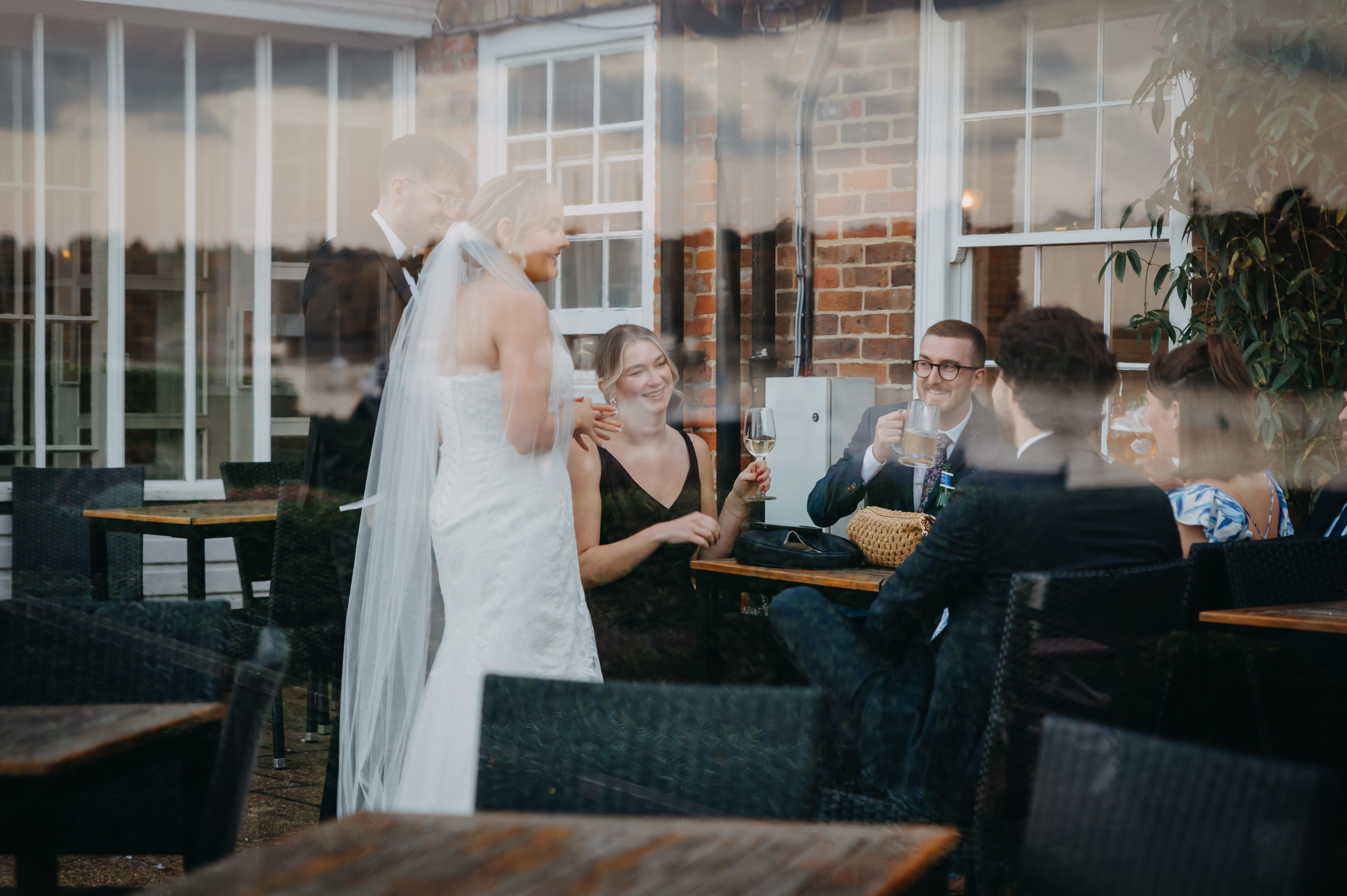
- real moments don’t need coaching
- people relax when they’re not being managed
- the story lives in what happens naturally
- your wedding deserves to feel like a day, not a shoot
This is the first post in a series called “Notes on Seeing”, focused on how I work and how I see weddings.
Next up: Why an unscripted wedding day isn’t messy — it’s alive.