
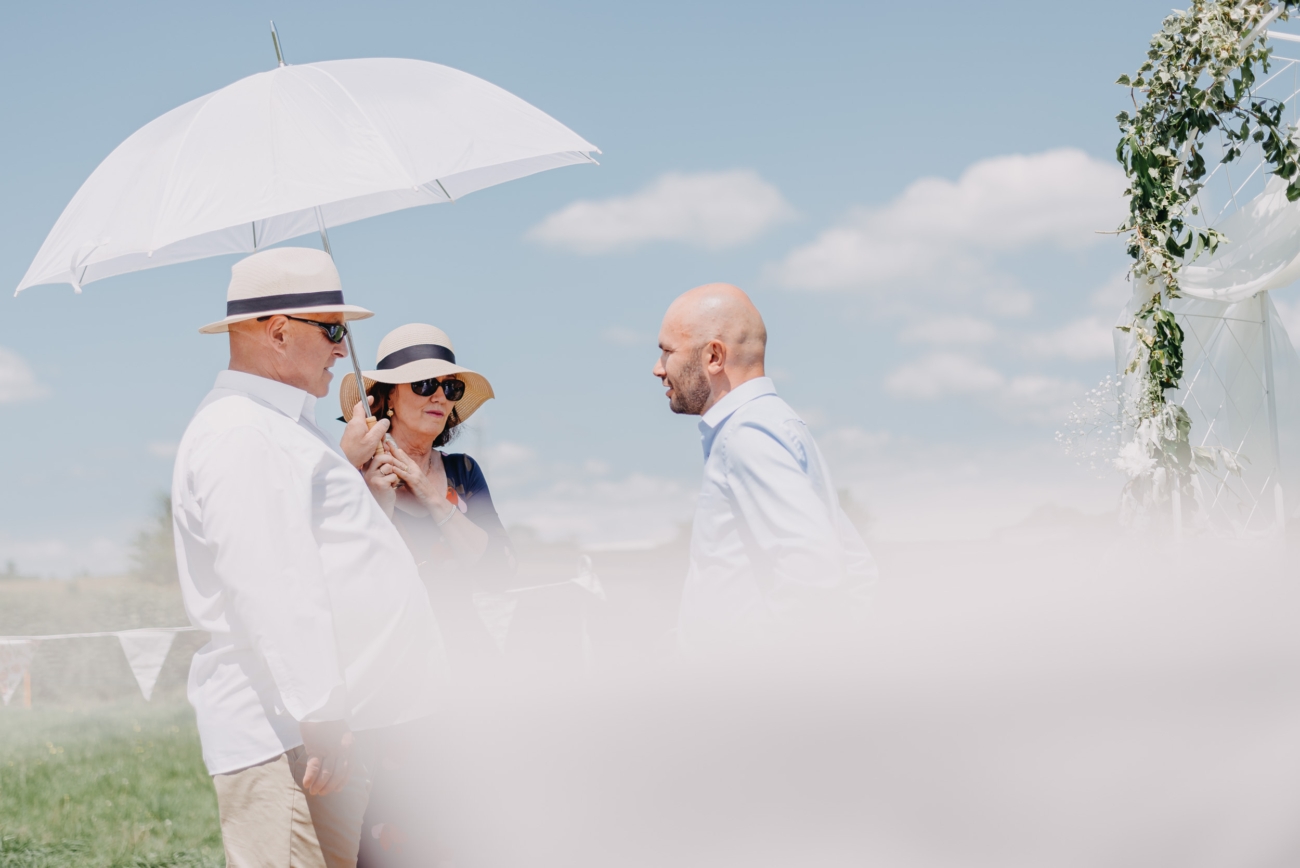
Although this article grows out of wedding photography, the questions it raises apply to photography far beyond weddings. How images communicate, how meaning is shaped, and how language quietly frames what we see are not limited to any single genre.
Photography is often described as having a language. But the longer you work with images, the harder it becomes to separate the photograph from the language itself. A wedding photograph doesn’t simply show what happened — it speaks, long before we reach for words like romantic, candid, or documentary. Those words arrive later, as attempts to translate something that has already been said visually.
Every wedding photo is described, categorised, labelled — sometimes carefully, sometimes carelessly. We call images romantic, candid, editorial, luxury, emotional. These words feel natural, almost obvious. But they quietly shape how we understand what we’re looking at — often before we’ve really noticed the photograph itself.
This article isn’t about defining styles or ranking them. It’s about something simpler, and perhaps more fundamental: how language frames photography, and how the words we use influence the way weddings, venues, and moments are seen.
In this article
Wedding Photography Language — Seeing Before Naming
The wedding photography language we use every day often feels intuitive. We rarely stop to question it. Certain words circulate so widely that they begin to feel like facts rather than interpretations.
Yet this language does something subtle but powerful. It tells us what to notice. It tells us what matters. And, just as importantly, it tells us what can safely fade into the background.
Before a couple looks closely at a photograph, they already carry expectations shaped by language. They are primed to see emotion, romance, elegance, drama — or to dismiss an image as “not quite right” — based not on the photograph itself, but on the vocabulary surrounding it.
Words Don’t Just Describe Photos — They Translate Them
A photograph does not arrive with instructions. It doesn’t explain itself. It presents a moment, a fragment of time, and leaves the rest open.
The words we attach to images function as translations. They don’t merely describe what is visible — they frame how the image should be read. A quiet moment can be described as intimate, distant, awkward, calm, or emotionally restrained. Each word nudges the viewer in a different direction.
What we often call style is, in reality, part of a broader visual language in photography — one that operates long before we consciously try to name what we see.
“Documentary”, “Candid”, “Editorial” — Same Wedding, Different Languages
Nowhere is this more apparent than in wedding photography, where similar moments are routinely described using very different terms.
The same exchange of glances.
The same laugh during the ceremony.
The same room, the same light.
Different words — different meanings.
Documentary Is Not the Absence of Aesthetic
Documentary wedding photography is sometimes misunderstood as something raw or unrefined, as if observation automatically excludes intention.
In practice, documentary photography requires restraint rather than indifference. It is built on attention, timing, and an awareness of how moments unfold without interference. The aesthetic is not removed — it is simply not imposed.
This idea echoes the way thinkers like Roland Barthes approached photography: not as a neutral record, but as something charged with meaning, capable of affecting the viewer without explanation. A photograph can say something long before anyone tries to put it into words.
Candid Doesn’t Mean Accidental
Candid wedding photography is often described as spontaneous or unplanned, but this can be misleading. A candid photograph is not a mistake, nor is it a lucky coincidence.
It is the result of waiting rather than directing. Of recognising a moment as it emerges, instead of constructing it. The absence of instruction does not imply the absence of intention.
The photograph remains attentive — it simply allows the moment to belong to the people within it.
Editorial Is a Language Too — Just a Different One
Editorial wedding photography speaks a different visual language. It often relies on structure, refinement, and deliberate composition. Moments are shaped, arranged, and presented with a clear sense of how they should be read.
This is not a criticism. It is simply an acknowledgement that different photographic languages operate according to different rules. Editorial photography interprets the wedding by guiding the viewer. Documentary photography observes it by stepping aside.
Neither approach exists outside language. They simply speak it differently.
Venues Speak Too — The Photographer Decides Whether to Listen
Wedding venues are often treated as neutral backdrops — beautiful spaces where events happen. In reality, venues are active participants in the visual narrative.
Architecture influences movement. Light dictates where people gather. Narrow corridors encourage intimacy, while open halls create distance. These elements shape behaviour long before a photographer arrives.
A Venue Is Not a Backdrop — It’s a Narrative Constraint
Every space carries limitations as well as possibilities. These constraints are not obstacles to overcome, but cues to be noticed.
A photographer can work against them, reshaping the space to fit a preferred aesthetic. Or they can listen, allowing the venue to influence the rhythm of the photographs.
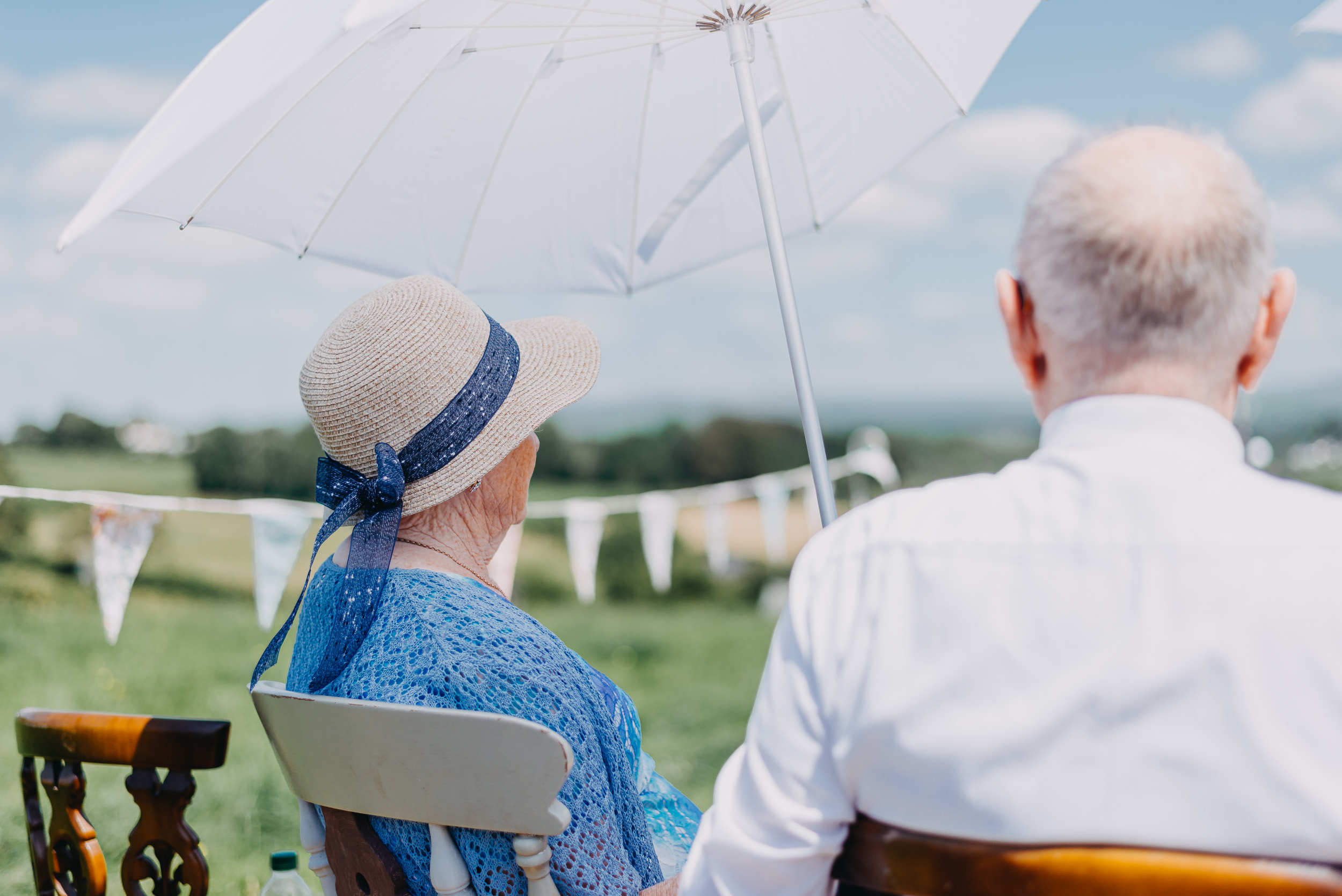
The choice is rarely discussed, yet it has a profound impact on how a wedding is ultimately seen.
Why the Same Venue Looks Completely Different in Different Portfolios
This is why the same venue can appear calm in one portfolio and dramatic in another. Why it can feel intimate in one set of images and grand in the next.
The building hasn’t changed.
The light hasn’t changed.
The language has.
What we see in wedding photography is never just the venue itself. It is the venue interpreted — filtered through a particular way of seeing, shaped by decisions about proximity, patience, and control.
Why Choosing a Photographer Is Also Choosing a Language
When couples talk about wanting “natural photos” or “something relaxed,” they are often responding to language before imagery. The words feel reassuring, familiar, safe.
But language also sets expectations. A photographer fluent in one visual language may struggle to meet the expectations of someone who unconsciously speaks another.
This is why style conversations matter. Not because one approach is superior, but because mismatched languages can quietly lead to disappointment.
Before You Ask “Do You Like This Venue?” — Ask “How Do You See It?”
This small shift changes the conversation. It moves the focus away from taste and towards interpretation. Away from preference and towards perspective.
It acknowledges that photography is not just about recording what happened, but about translating experience into something that can be seen, remembered, and felt.
Reading the Venue Through a Documentary Lens
When photography leans toward observation rather than instruction, venues are allowed to reveal themselves gradually. Architecture becomes contextual rather than decorative. Light becomes part of the story rather than a technical problem to solve.
This approach becomes especially clear when working at places like Hensol Castle, where space and atmosphere quietly shape the rhythm of the day. The venue does not demand attention — it offers it, moment by moment, to those willing to notice.
In this sense, photography as a language is not about adding meaning, but about recognising the meaning already present.
Seeing Before Naming
There is a strong temptation to label photographs. Words offer certainty. They help us organise experience and reduce ambiguity.
Yet some of the most powerful images resist immediate naming. They invite hesitation. A pause. A moment where feeling precedes explanation.
Susan Sontag once suggested that photographs encourage interpretation even when meaning remains unresolved. That uncertainty is not a flaw. It is part of how images work.
Once you begin to notice the language surrounding photography, it becomes difficult to unsee it. The words do not disappear — but they become choices rather than assumptions. And that awareness quietly changes the way we look.